Newsletter Subscribe
Enter your email address below and subscribe to our newsletter

 ByJohn A
Water rarely behaves the same way from one property to the next, and equipment bought on assumption tends to disappoint. A reverse osmosis water filter that suits a suburban kitchen may struggle at a lake-fed cottage or fall short in a small commercial kitchen. The difference sits in demand, source water and the way each building actually uses its supply.
Choosing on price or shelf appeal hides the real question, which is how much treated water the site needs and how hard the incoming supply works the membrane. A reverse osmosis water filter sized around genuine daily demand produces consistent results and predictable running costs across homes, seasonal properties and busy commercial premises.
Household Demand Follows a Steady Daily Pattern: Most family homes draw treated water in short, repeated bursts through the morning and evening, which suits a modest under-sink unit with a small storage tank. Municipal or drilled well supplies usually arrive with fairly stable chemistry, so the membrane faces a consistent load and the pre-filters wear at a rate owners can plan around.
Cottage Supplies Change with the Season and the Source: Lake and river water carries sediment, organic matter and turbidity that shift after rainfall, spring melt and heavy boat traffic. That variability strips pre-filters faster and can foul a membrane within a single season if nothing sits ahead of it. Seasonal use adds another layer, since equipment left standing over winter needs draining and careful restart.
See also: How Businesses Encourage Technology Access
Rated Output Should Match Real Consumption: Reverse osmosis units are rated in litres per day under test conditions, and real output drops as feed pressure and temperature change. A household of four might use ten to fifteen litres of treated water daily, while a small café or guesthouse can pass that before mid-morning. Canadian drinking water quality guidelines give a reference point when judging what treatment the incoming supply requires.
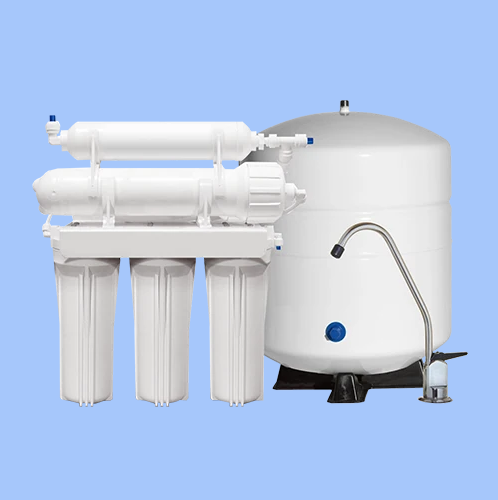
Storage and Recovery Matter as Much as the Rating: Storage capacity decides whether a system can cover peak demand, because membranes produce treated water slowly and steadily rather than instantly. A reverse osmosis water filter paired with a larger pressurised tank or a booster pump keeps a busy kitchen supplied when several taps draw at once. Commercial sites also send more reject water to drain, so recovery rate belongs in the calculation.
A Full System Suits New Installations and Failing Equipment: A complete system makes sense when no treatment exists, when the housing has cracked or when the existing unit no longer matches the property’s demand. Buying the whole assembly means the membrane, housings, tank and fittings are designed to work together, which removes the risk of pairing parts from different generations of equipment.
Replacement Cartridges Keep a Sound System Performing: Replacing cartridges and membranes on schedule costs far less than replacing a whole system, and it holds treated water at the standard the equipment was chosen to reach. Testing the output against the published maximum acceptable concentration for a contaminant of concern shows when a membrane has passed its useful life rather than leaving the decision to guesswork.
Mismatched Systems Demand Attention They Were Never Built For: An undersized unit on a heavy-use property runs almost continuously, which shortens membrane life and turns filter changes into a frequent chore. In everyday service work, water treatment technicians routinely see cottage systems installed without adequate pre-filtration that needed new membranes long before the expected interval, at a cost well above the filters that would have protected them.
Delayed Action Narrows the Choices Available Later: Postponing treatment allows sediment, scale and iron to settle into taps, appliances and hot water tanks, and those deposits rarely leave without help. Water heaters and coffee equipment fail earlier, staining becomes permanent on fixtures, and what began as a straightforward filtration decision turns into a repair bill alongside the original purchase.
A Short Assessment Prevents the Wrong Purchase: Measuring what the supply delivers, what the household or business consumes and what the water contains gives a shortlist that fits rather than a compromise. Property owners who gather these details first tend to buy once, and the same notes make reordering parts far easier later. These points cover the ground that matters most.
Treated water that arrives reliably, tastes clean and costs what was expected comes from matching equipment to the property rather than to a price bracket. A reverse osmosis water filter chosen around measured demand and tested supply protects appliances, simplifies servicing and holds its performance across the years it is meant to last.
A system matched to the property keeps water dependable and maintenance predictable. Every season spent with the wrong equipment adds avoidable filter changes, early membrane failure and water that never quite meets expectations. Speak with a water treatment specialist about a system assessment and a supply test before the next purchase.