Newsletter Subscribe
Enter your email address below and subscribe to our newsletter

 ByJohn A
A South Asian wedding rarely fits into a single afternoon. There is the mehndi, the sangeet, the ceremony, and a reception that runs later than anyone planned for. Each event demands a different outfit, different lighting, and a photographer hunting for close-ups. Most brides settle the clothes first and leave the accessories until the outfits arrive, which feels sensible right up until the calendar tightens.
The shortcut most families take is one heavy set worn across all four days. It reads clearly in the album afterward, where the same necklace sits at the same collarbone in every single frame. Indian bridal jewelry holds up better when it gets planned event by event, with deliberate changes in weight, metal tone, and how much of the neckline each piece covers. That does not mean four full sets. It means one anchor set and a handful of pieces that can be swapped around it.
Daytime functions reward restraint, or something close to it. Hands stay busy at the mehndi, so heavy bangles get in the way and are usually removed halfway through the afternoon. A pair of jhumkas, a slim Maang tikka, and one bracelet on the free wrist photograph better than a full stack ever will. Sangeet runs on opposite energy but similar logic. Anything that swings or catches light earns its place, and anything that needs constant adjusting does not.
This is the part of the bridal trousseau that people underbuy. The budget goes to ceremony pieces, and then whatever is lying around gets borrowed for the first two nights, which is exactly how mismatched photos happen. Two lighter sets at reasonable prices cover those events without touching the main expense. Cubic zirconia and gold-plated designs sit in that range and carry enough shine under warm indoor lighting.
See also: How Businesses Encourage Technology Access
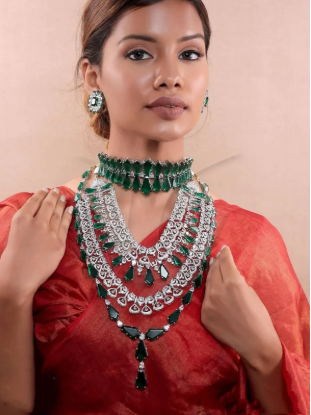
Ceremony pieces do the real visual work. A layered kundan or polki necklace, matching earrings, a Maang tikka, and a nath if the tradition calls for one. Here, tonal dressing matters more than variety. Keeping the metal tone consistent across every piece, whether in antique gold or a brighter polish, prevents the whole look from seeming hastily assembled. Mixing warm antique finishes with bright yellow plating in the same frame is the most common misstep, and it shows up in photographs even when it looked fine in the mirror.
Fit deserves the same attention. A choker sitting too low against a high-necked blouse fights the outfit instead of finishing it. Indian bridal jewelry that fits the neckline properly needs no adjusting once the ceremony starts.
Receptions have loosened up a great deal. Gowns, saris, lehengas in unexpected colors, sometimes a full outfit change midway. Indian bridal jewelry for this event can step away from tradition without losing the thread entirely. A single sculptural necklace against a plain neckline works, or long earrings with the hair pulled back and nothing at all at the throat. Less coverage, more contrast.
Emerald and ruby stone settings do well here because they pull color from the outfit rather than competing with it. Antique and silver-toned finishes photograph cleanly under the harsher lighting most reception venues run.
Roughly half of the jewelry spent is for the ceremony set. The rest is divided among mehndi, sangeet, and reception, with the reception piece taking the larger share because it is worn again long after the wedding. Pieces bought for the lighter functions rarely stay boxed. They come out for Diwali, for a cousin’s engagement, for whatever lands next.
Ordering early solves more problems than any other decision here. A seller shipping domestically within the US removes the customs delays that catch people ordering from overseas, and it leaves time to send something back if the tone reads wrong in daylight. Six to eight weeks ahead of the first function is comfortable. Three weeks is a gamble.
Lock the ceremony set first, since every other choice gets made against it. Fill the lighter functions with pieces priced to be worn again rather than pieces bought to be seen once. Indian bridal jewelry planned this way costs less across the whole week than four separate impulse buys, and it looks far more considered once the photographs come back.
Browse the bridal collections, compare the metal tones side by side, and order while there is still time to change your mind.